By DPIN Team
From Hackathon to Implementation: How APH Accelerated a Municipal AI Concept
One of the core questions behind the Amsterdam Policy Hackathon is whether a hackathon can move beyond ideas and actually influence policy practice. Our collaboration with the Municipality of Amsterdam suggests that it can.
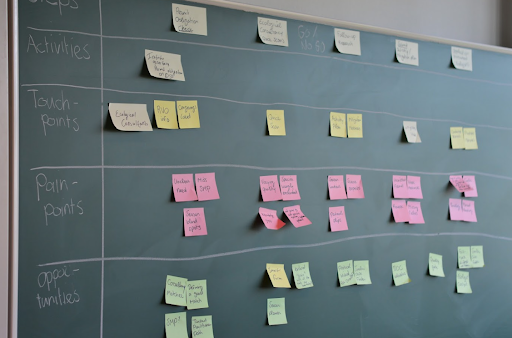
During the latest edition of APH, the municipality presented a case focused on the energy transition: how could an AI-driven platform help citizens navigate complex choices around sustainability — such as home insulation, energy use, and available subsidies — while offering tailored, understandable advice?
A policy challenge with real constraints
The challenge was not to design technology for technology's sake. Any solution would need to be citizen-centric and accessible, translate complex policy and subsidy structures into clear personal guidance, and be realistic enough to fit within a municipal context. Over the course of the hackathon weekend, interdisciplinary teams worked with data, policy constraints, and stakeholder input to develop proposals addressing these requirements.
"A lot of hackathons can be abstract and have no real purpose. What I especially liked about the municipality challenge is that there is something concrete behind it — a tangible impact. It's a nice example to set for other municipalities in the world, if it works in Amsterdam."
A proposal that didn't stop at the pitch
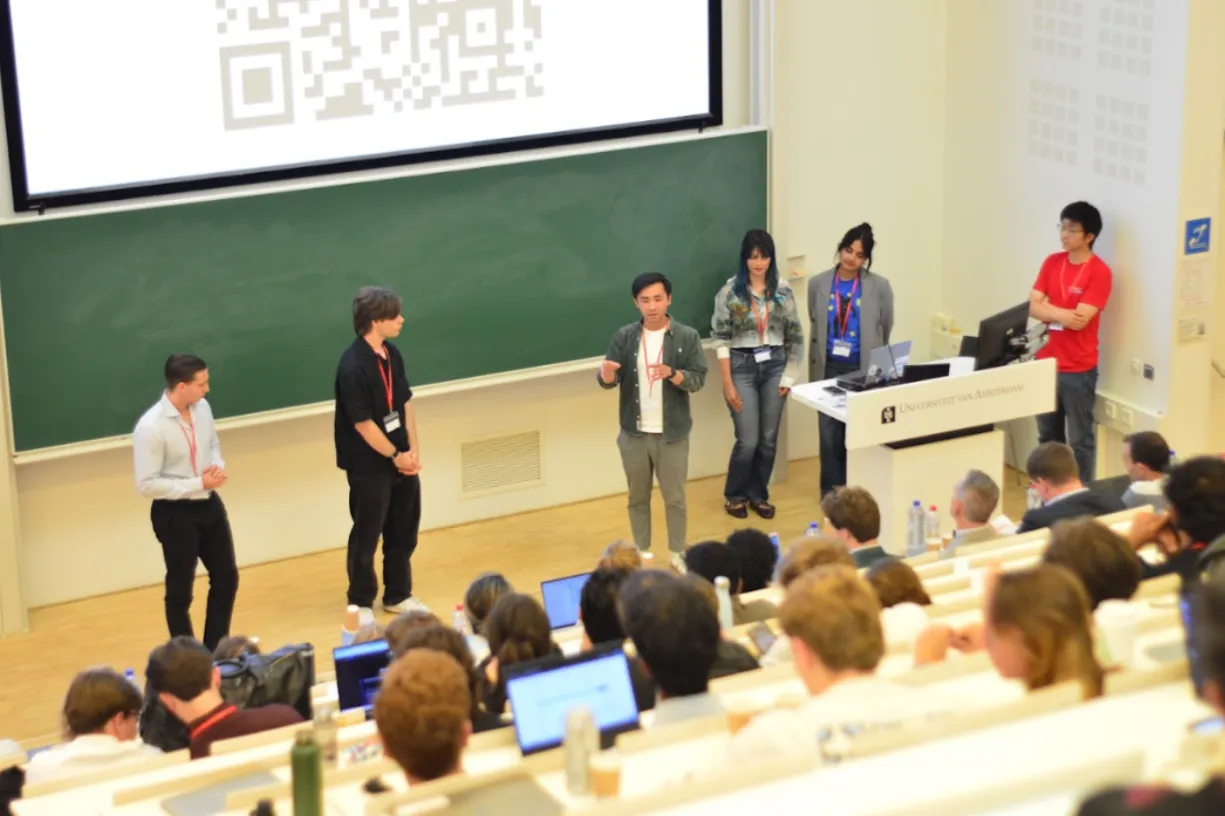
The winning team developed a concept for an AI-supported platform that would provide personalized energy advice, clearly linking individual actions to financial, environmental, and practical outcomes. Their solution also created a feedback loop for policymakers and analysts to learn from the needs of citizens engaging with the platform. Crucially, the proposal addressed not only technical feasibility, but also governance, transparency, and public trust.
"We didn't like the AI chatbot idea. It already exists — you can ask any model, people already have that. The real issue wasn't a lack of information. The gap is that people don't care, or they don't have the guidance to get the information and act on it."
The team's solution instead aimed to meet citizens where they are: a platform that gives personalized guidance regardless of whether you are a homeowner or a renter, that doesn't feel like talking to a chatbot, and that also helps policymakers understand which information was lacking and which policies were working.
What happened next is where the story becomes unusual. Following the hackathon, the municipality continued exploring the concept internally, and the idea moved into further development discussions. Rather than ending as a slide deck, the concept entered an active development phase within the municipal organization.
The value of interdisciplinary teams
One of APH's defining features is that teams are deliberately composed across disciplines — bringing together students and practitioners from engineering, law, policy, and the social sciences. For this challenge in particular, that mix proved decisive.
"I was the only engineer on my team. There were people from business, law, and public policy. That's also a problem in other hackathons — everyone has the same background. Having different angles on the same problem really makes you think about what can realistically be done with an idea in the future."
That cross-disciplinary dynamic also produced unexpected breakthroughs. The participant noted that their initial instinct was to focus on technical execution — building a demo website. It was a teammate from a non-technical background who proposed extending the platform to serve both residents and policymakers simultaneously — a design choice that became central to the final concept.
Real feedback, in real time
Beyond teamwork, the hackathon structure itself created rare access to genuine stakeholder input. During the event, teams had an opportunity to receive feedback from a municipal contact — a moment participants found unusually grounding.
"It is very nice to get actual feedback. Often it can be abstract, especially for students, to get in touch with the professional side of things — to get a reality check. They can point out something we're missing, or guide us in a certain direction. It's again a mix of perspectives."
Momentum beyond the initial team
The concept was later presented at the municipality's office during an internal session attended by policymakers from multiple departments. As a result, nine policymakers signed up to be involved in further developing the idea, signalling broad internal interest and institutional ownership.
"The Amsterdam Policy Hackathon acted like an accelerator. It pushed the idea from something abstract to something concrete that will actually be worked on."
Impact for participants and education
This outcome is also a success for the participants involved. Some of the winning team's members are students in the MSc Complex Systems and Policy at the University of Amsterdam, highlighting how academic training can directly connect to real-world policy innovation.
"It's very much worth it if you want to work on something that can bring your ideas into the real world. It doesn't matter what your background is — there are people with very creative energy and people with a technical background, and they complement each other. If you're looking for something grounded and meaningful, I'd recommend it."
Looking ahead
For APH, this case demonstrates the value of interdisciplinary collaboration, structured policy challenges, and close engagement with public-sector partners. It shows that hackathons, when designed carefully, can help bridge the gap between experimentation and implementation.
As APH expands to new cities and becomes part of the broader Data for Public Impact Network (DPIN), this collaboration offers a concrete example of the kind of impact we aim to support: ideas that survive beyond the weekend and contribute to public value in practice.
Interested in joining a future event? See policy hackathons for hubs and announcements.